Instruments by Science Group
 Macromolecular
 Soft Condensed
  Imaging and
 Biological
 Magnetic
 Structures and
 Crystallography
  Spectroscopy
 I07 Contact
Beamline Phone Number:
+44 (0) 1235 778201
Principal Beamline Scientist:
Francesco Carlà
Tel: +44 (0) 1235 778023
E-mail: [email protected]
Science Group Leader
Cephise Cacho
Email: [email protected]
Tel: +44 (0)1235 778290
I07 Surface and Interface Diffraction
Status: Operational
Wavelength: 0.4 - 2.0 Å
Energy: 6 - 30 keV
Energy: 6 - 30 keV
Molecular adsorption and self-assembly
The thermodynamic, structural and dynamic properties of adsorbed molecular films are important to many technologically and industrially relevant areas. Processes such as preferential adsorption can be important for real-world applications, where the interfacial interaction occurs in bulk solution or under ‘high’ gas pressures.
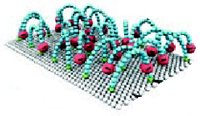 Another area with huge potential is in molecular purification. It is often very important to ensure molecular purity but at the level of separating enantiomers this can be very difficult. This type of subtle molecular purification would be invaluable since, for example, the effectiveness of many drugs is dependant on this distinction, as demonstrated by the case of thalidomide. The ability of a specific (e.g. chiral) surface to selectively adsorb one enantiomer in preference to the other would therefore have tremendous potential.
Soft condensed matter and biological systems
Characterised by a wide range of length and time scales, complex multi-component, multi-phase and non-equilibrium systems, soft-condensed matter materials and biological materials (such as lipids and biological macromolecules) have attracted widespread interest in the UK scientific community. These materials play a very important role in a wide range of different technologies, and in many cases, their interaction with surfaces is crucial to their application. Thus understanding interfacial interactions at the molecular level (e.g. surfactants, amino acids, proteins or polymers) is essential for future developments.
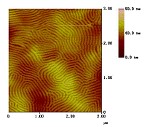 The interaction of polymers and surfactants at interfaces is very important for applications such as hair conditioners, paints, coatings, cosmetics, foodstuffs, and drug delivery systems. Yet relatively little is known about the surface and near-surface ordering in such systems, especially for the types of multi-component mixture used in most applications.
A wide range of biological systems could also be investigated. An example is the case of interfacial enzymes. Despite often knowing their structure to atomic resolution, the mode of action of these enzymes is not well understood.
Tissue Engineered Medical Products (TEMPS) are important materials where improvements are likely, due to advances in the scaffold materials and processing techniques. Particular emphasis is being placed on surface properties and their subsequent interactions with cells and various types of growth factors. The proposed beamline will allow the correlations between subtle structural changes and phase purity to be made with the invoked biological response.
Structure of solid surfaces
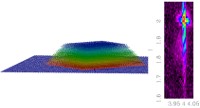 Accurate determination of the structure of a solid surface is important for an increasingly diverse range of disciplines, such as engineering, physics, electronics, heterogeneous catalysis and materials science. UHV measurements will form a considerable component of the studies on this beamline, particularly where the samples are known to form complex surface structures or to contain weakly scattering atoms.
In addition to UHV measurements, the ability of X-rays to penetrate matter allows diffraction to be applied to buried interfaces including solid-solid interfaces such as at the grain boundary between well-ordered crystals. X-ray diffraction is an ideal technique to measure the structure of quantum dot interfaces (buried to prevent oxidation) in–situ without the requirement to cleave the sample. Other applications include the study of multilayer structures that are of interest because of the enhanced properties they can exhibit due to indirect coupling across layers.
Solid-liquid, air-liquid and liquid-liquid interfaces
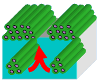 The properties of the solid-liquid interface are of considerable importance in a number of disciplines including tribology, electrochemistry and catalysis. For example, most of the significant activity in electrochemical and some catalytic applications occurs at the interface between solid and liquid. The high flux of I07 and careful cell design allows real-time studies of electrochemical reactions to become more readily available.
Further, a beam deflection system is installed on I07 which improves studies at air-liquid and liquid-liquid surfaces. These interfaces play an important role in a huge number of chemical and biological systems. X-ray reflectivity is one of the few techniques available for structural investigation of these interfaces and in many cases provides complementary information to that available from Neutron reflectivity.

Diamond Light Source is the UK's national synchrotron science facility, located at the Harwell Science and Innovation Campus in Oxfordshire.
Diamond Light Source Ltd
Diamond House
Harwell Science & Innovation Campus
Didcot
Oxfordshire
OX11 0DE
Copyright © Diamond Light Source. Diamond Light Source® and the Diamond logo are registered trademarks of Diamond Light Source Ltd
Registered in England and Wales at Diamond House, Harwell Science and Innovation Campus, Didcot, Oxfordshire, OX11 0DE, United Kingdom. Company number: 4375679. VAT number: 287 461 957. Economic Operators Registration and Identification (EORI) number: GB287461957003.