Instruments by Science Group
 Macromolecular
 Soft Condensed
  Imaging and
 Biological
 Magnetic
 Structures and
 Crystallography
  Spectroscopy
 B18 Contact
Beamline Phone Number:
+44 (0) 1235 778695
Beamline E-mail:
Principal Beamline Scientist:
Diego Gianolio
Tel: +44 (0) 1235 778228
E-mail: [email protected]
Science Group Leader
Email: [email protected]
Tel: +44 (0) 1235 778158
B18 Core XAS
Status: Operational
Beamsize: 200 µm x 250 µm
Energy: 2.05 - 35 keV
Energy: 2.05 - 35 keV
For ex-situ samples
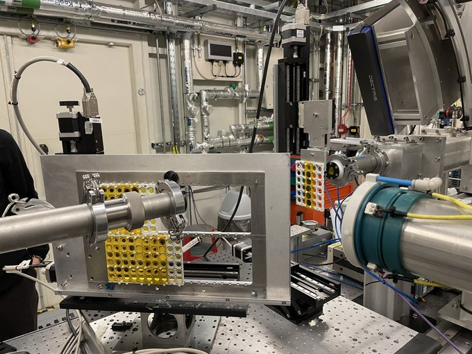
| Large sample plate | Accommodates multiple sample holders and can accommodate upto 200 pellets. Sample holders are 3D printed and can be shipped to users ahead of the experiment. |
| Air sensitive shuttle | For measuring air senstive samples with soft x-rays |
| Robot | Under commissioning. Automatic sample changer with the possibility to accommodate 200+ samples |
Furnaces
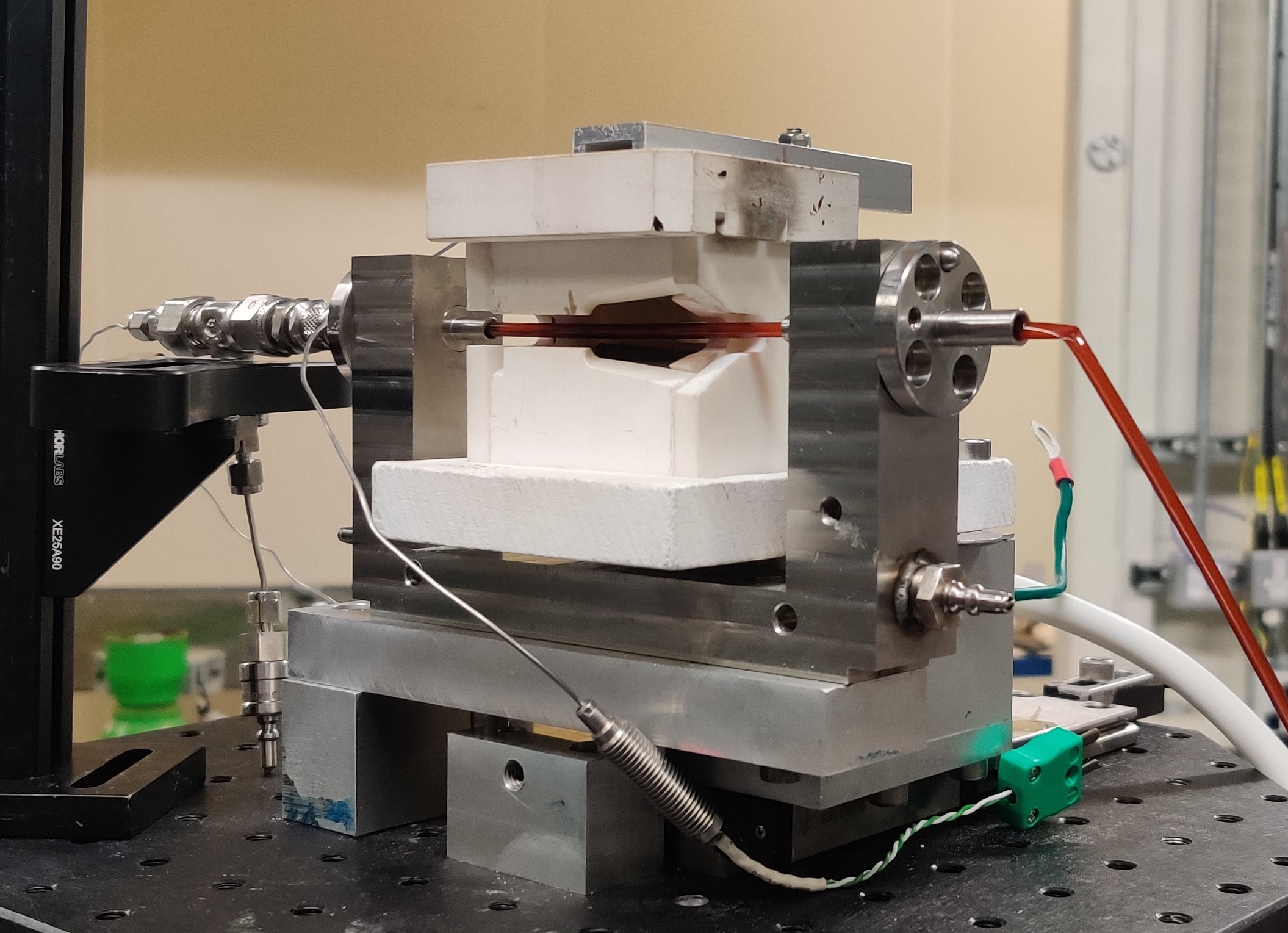
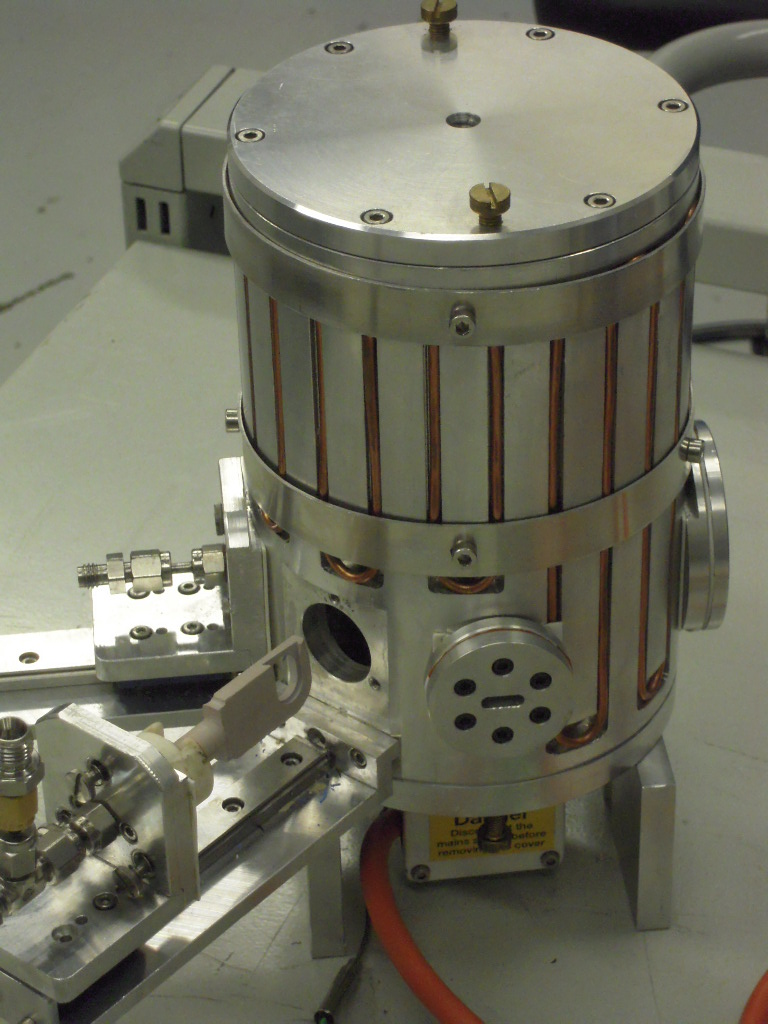
RT-1000ºC
| Capillary furnace | Capillary-based sample environment with integrated wire heaters and gas flow system, operating in the temperature range RT - 1000ºC. Capillaries of 100mm length and 3 or 6 mm diameter fit this furnace. Quartz capillaries (50μm and 250μm thickness) and kapton capillaries available on B18. |
| 13mm pellet furnace | Operating in the range RT-1000°C. Inert and some reactive gases possible – please ask. |
B18 has its own gas delivery system, with a manifold which allows to switch between 8 gas compositions. If your experiment will use gases, please discuss this well ahead of time with beamline staff. Following are some guidelines for the use of gases in the furnaces:
| Flammable gases | Please refer to LFL limits |
| Toxic gases | An additional LEV enclosure will be used |
| Corrosive gases | Please contact beamline staff |
| As far as possible, please consider minimizing volume of the gases and concentrations. | |
Cryostats
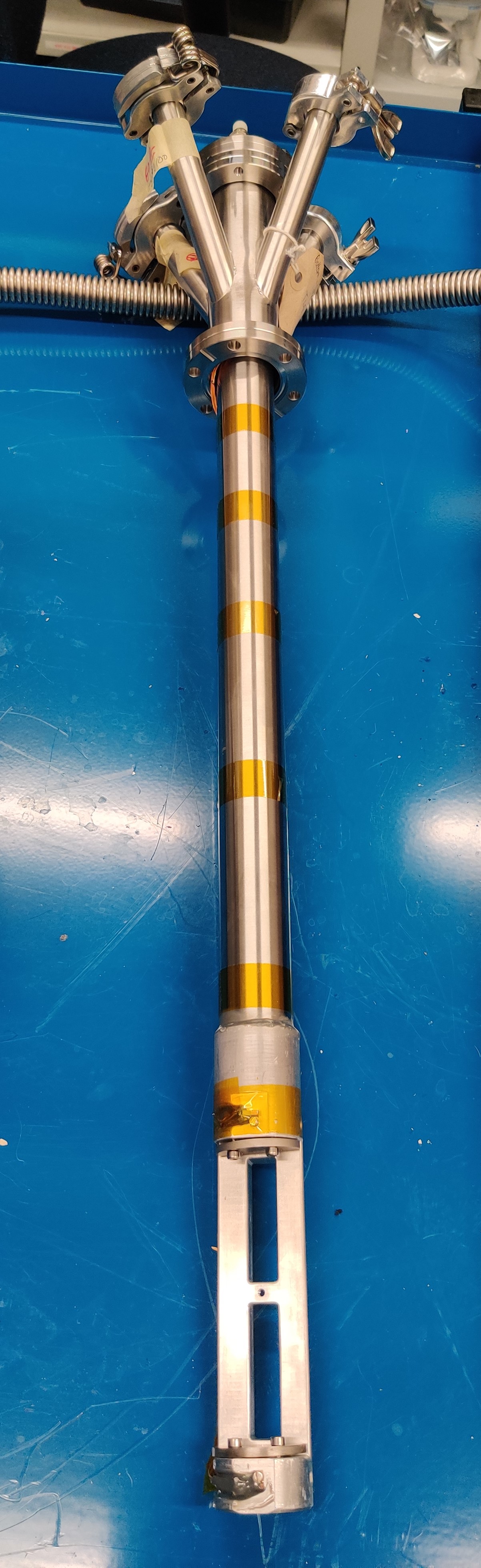
| High troughput LN2 cryostick, compatible with soft x-rays (can accommodate multiple samples) | RT - 77K |
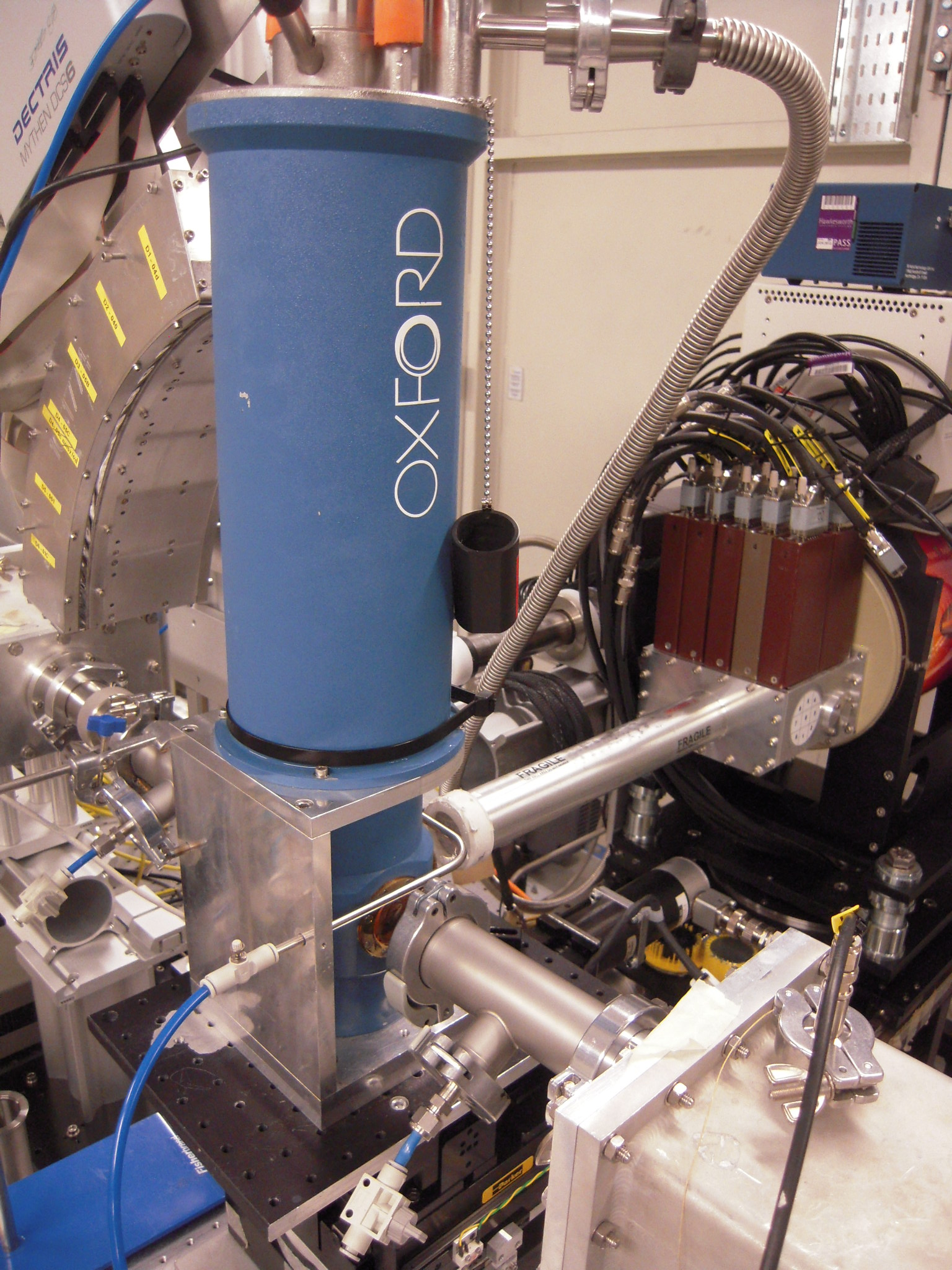
| Oxford instruments LN2 cryostat (can accommodate 1 sample at a time) | RT - 77K |
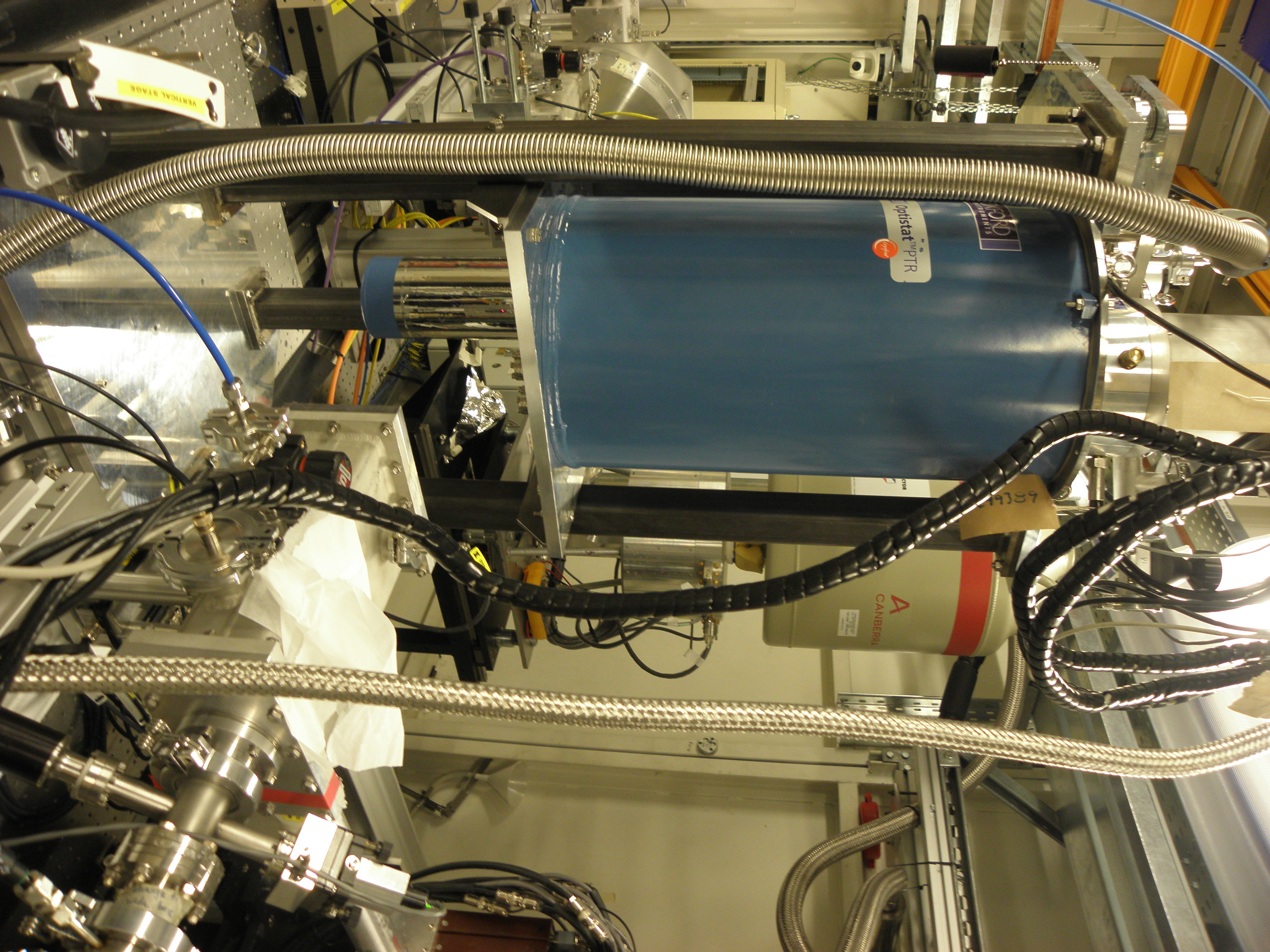
| Helium Pulse Tube cryostat (can accommodate upto 4 samples) | RT - 4K |
Electrochemistry kit
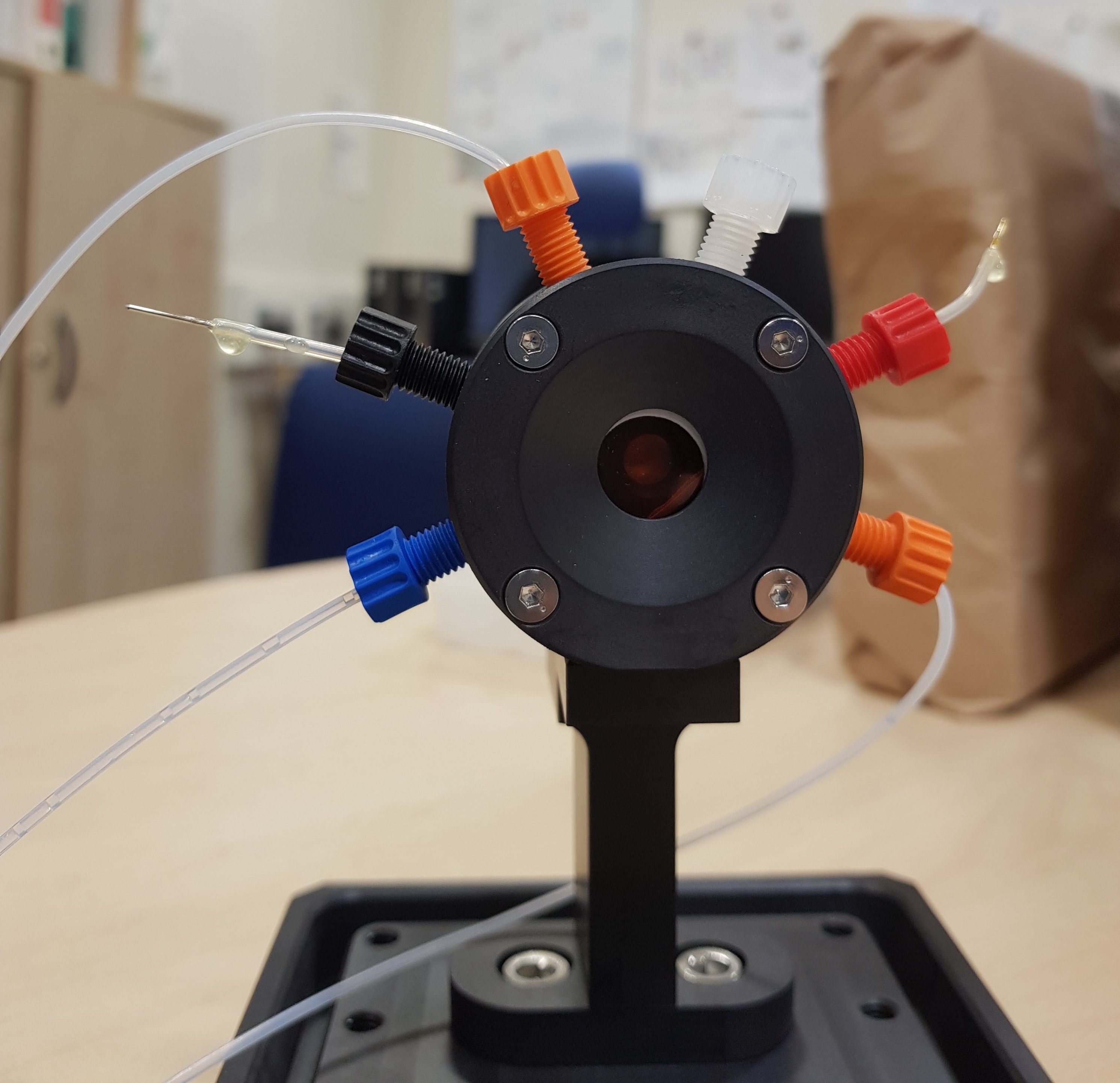
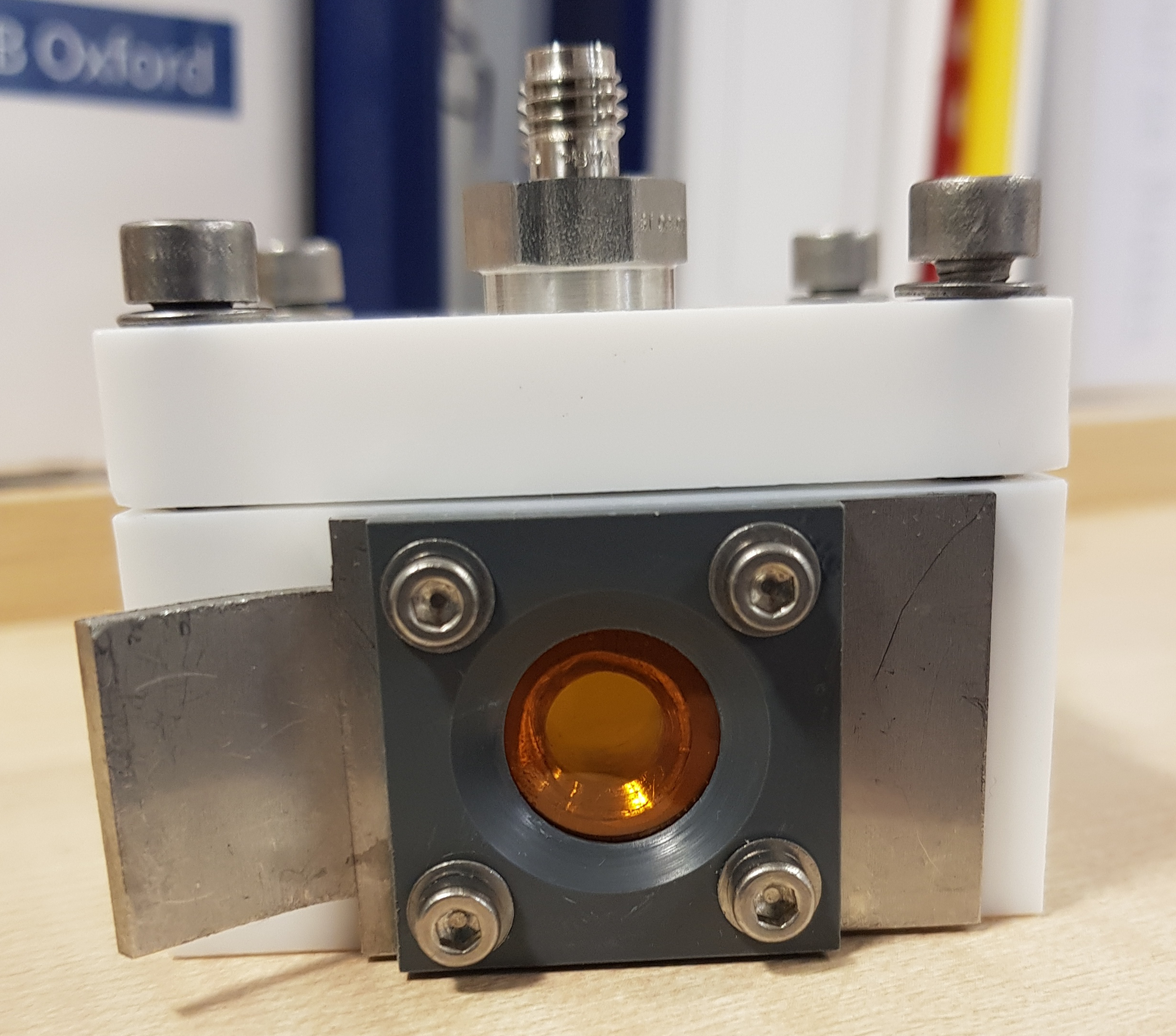
| Ivium Octostat |
8 independent channels Voltage range: ± 10V Current range : ± 200mA |
| Peristaltic Pump |
Three independent channels. Dual direction. Flow rate: 0.0002-35 mL/min Speed range: 0.1-100 rpm Tubing compatibility: IDs (mm) 0.13, 0.19, 0.25, 0.38, 0.44, 0.51, 0.57, 0.64, 0.76, 0.89, 0.95, 1.02, 1.09, 1.14, 1.22, 1.3, 1.42, 1.52, 1.65, 1.75, 1.85, 2.06, 2.29, 2.54, 2.79, 3.17 |
| Reference electrodes |
Ag/AgCl, Hg/HgO, SCE (Saturated Calomel Electrode) for our flow cell |
Support Labs
|
Three labs: wet, dry and characterisation |
With basic equipment such as hot plate, balances, selection of glassware, pestle and mortar, tweezers, spatulas etc. |
|
Thermo FT-IR Microscope |
FT-IR with mapping capabilities |
| Wet O2 free and H2O/O2 free Ar glove boxes | Please request for a glove box in the proposal/ERA |
|
Perkin Elmer UV spectrometer |
|
|
Renishaw Raman Microscope |
Micro-Raman system with mapping capabilities |
|
Zeiss AxioVision Optical Microscope |
|
|
Nikon Polarised Microscope |
|
|
Fume cupboard |
|
|
Incubator |
|
|
Microbiological safety cabinet (class 2) |
|
|
Grinding/Polishing machine |
Range of polishing grades available |
|
Cutting machine |
Water cooled |
|
Microtome |
WC and Stainless blades |
|
Pellet Press |
8 and 13mm dies on the bench. 8mm manual press inside the glove box |
|
Ball Mill for grinding samples |
For quantities < 1g |
|
Tube Furnaces |
Advance notice required. |
|
Upright Furnace |
Up to 1500C |
|
Clean Room |
Balance and Microscope installed |
|
Fridge/ Freezer (-20 C) |
Access to a -80 freezer available on request |
| Schlenk line | |
| Heat sealing machine | For heat sealing air sensitive samples inside aluminium pouches in glove box |

Diamond Light Source is the UK's national synchrotron science facility, located at the Harwell Science and Innovation Campus in Oxfordshire.
Diamond Light Source Ltd
Diamond House
Harwell Science & Innovation Campus
Didcot
Oxfordshire
OX11 0DE
Copyright © Diamond Light Source. Diamond Light Source® and the Diamond logo are registered trademarks of Diamond Light Source Ltd
Registered in England and Wales at Diamond House, Harwell Science and Innovation Campus, Didcot, Oxfordshire, OX11 0DE, United Kingdom. Company number: 4375679. VAT number: 287 461 957. Economic Operators Registration and Identification (EORI) number: GB287461957003.